
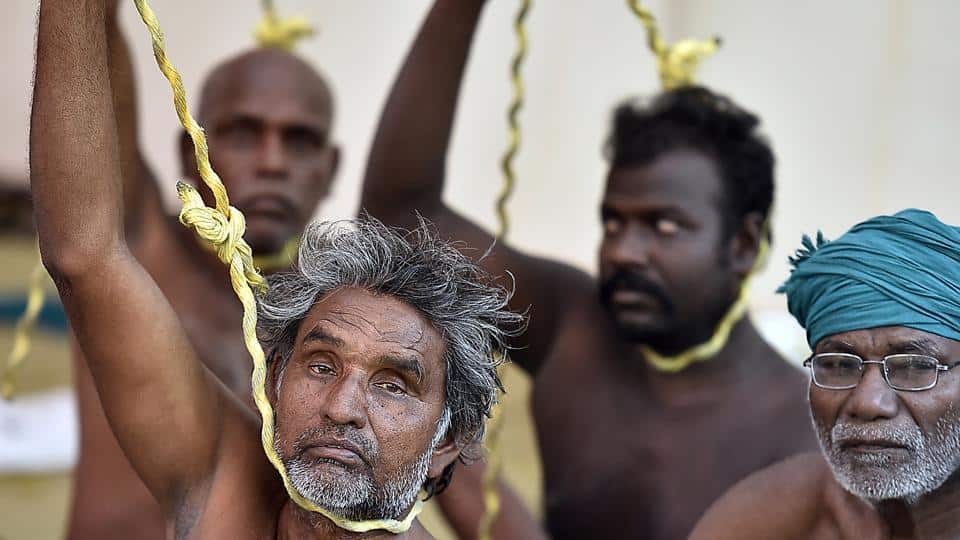
Source: Hindustan Times
Farmers across the country have been campaigning for farm loan waivers so much so that it is now a regular feature in the news: we have had a 3-month protest by farmers in 2016, another huge protest in October 2018, 10-day farmers protest starting in November 30, 2018 and so on.
One common demand made my farmers in almost all of these protests: The government must waive the loans issued by banks.
Politicians of various hues have joined in these protests to either demand loan waivers or to pan them – depending on who is in power in that state or at the centre. This issue has been so politicised that it now features prominently in the election manifesto of all parties.
But are loan waivers really the solution to all that ails the agrarian economy in India? The truth is that while many farmers are in deep debt, most of them are in debt to the local money lenders and not to formal institutions such as banks. It is estimated that over 80% of all borrowers in rural areas borrow from these money lenders.
Unlike the banking sector, the interest rates charged by the money lenders is astronomical. For instance, it is not uncommon for a money lender to lend Rs.50 in the morning and expect Rs.60 by evening -a cool 20% interest per day! or 600% a month! Apart from these astronomical rates that these money lenders charge, they also use extremely unethical practices to extract money from the poor – including taking their children or wives as collateral in exchange for money.

Very little has been done by the politicians to counter the grip of the money lenders on these hapless people. The rules that ban exploitative lending is rarely enforced in India. Most people are not aware that according to the law the maximum interest that can be charged by money lenders annually is just 14%!
As per the norms, the maximum interest rate in case of secured loan should be 14 per cent per annum and unsecured loan 16 per cent per annum. https://www.thehindu.com/news/national/karnataka/private-moneylenders-warned-against-charging-high-interest/article7429557.ece
It should be obvious that a poor, impoverished farmer will likely not find the courage to take on the might of the money lenders in the villages. So these laws about interest rates rarely gets enforced.
So that brings up the question: If these rural households – most of whom will be farmers, are unable to protect themselves against these exploitative dealings by these money lenders, who stands up for them?
If no one does, clearly the loan waivers that are being announced for farmers is not going to make much of a dent in the rural economy.
I propose that we are not going to be making any significant change in the debt burden of rural families (most of whom are farmers) unless we find a way to control the interest rates charged by money lenders and unless we find ways to release many of these families who have likely already paid back these loans AND ALSO huge interests on these loans.
Great post.